Movement & Strength - 5 min read
The benefits of combining strength training and Reformer Pilates
By Holixir - Women's Boutique Fitness - Northern Beaches Sydney · 14 July 2026
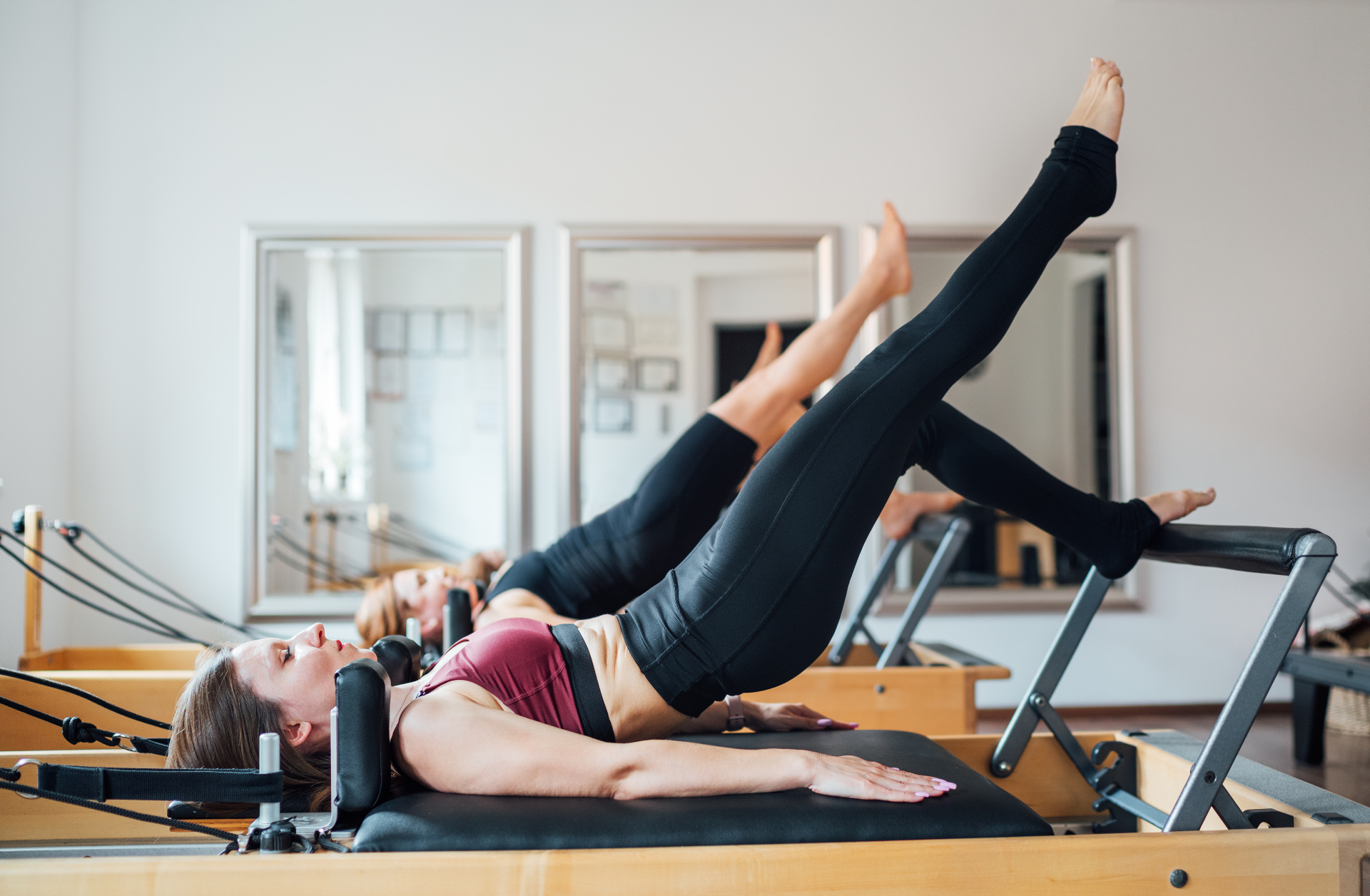
Strength training and Reformer Pilates develop different, but complementary, physical qualities. Combined, they create a more complete stimulus for musculoskeletal health, movement efficiency and long-term function.
Eve Insight
Strength trains prime movers and loads bone. Reformer Pilates trains control, alignment and the stabilisers around every joint. Programmed together, they cover what neither can do alone.
Strength training and Reformer Pilates develop different, but complementary, physical qualities. When combined in a weekly routine, they create a more complete stimulus for musculoskeletal health, movement efficiency and long-term function.
Strength training primarily targets muscle hypertrophy, maximal force production and bone loading. Progressive resistance has been shown to improve muscle mass, increase bone mineral density and enhance metabolic health. It also supports connective tissue strength and overall physical resilience.
Reformer Pilates, by contrast, emphasises neuromuscular control, joint positioning and intermuscular coordination. The use of controlled tempo, spring resistance and unstable positions challenges stabilising muscles and improves proprioception (the body’s awareness of movement and position). It is particularly effective for developing lumbopelvic stability, scapular control and movement precision.
Where the two modalities meet
When integrated, these modalities provide distinct physiological benefits:
Improved movement efficiency. Enhanced motor control from Pilates can optimise movement patterns during strength exercises, leading to better force transfer and reduced compensations.
Injury risk reduction. Greater joint stability and alignment awareness may decrease excessive load on passive structures such as ligaments and tendons.
Balanced muscular development. Strength training develops prime movers, while Pilates targets smaller stabilisers, supporting joint integrity.
Enhanced recovery and variability. Lower-load, controlled Pilates sessions can support active recovery and reduce cumulative fatigue from high-load training.
Programming the combination
From a programming perspective, combining both allows for exposure to both high mechanical load (strength) and low-load, high-control work (Pilates), a pairing associated with improved functional capacity and longevity.
A balanced approach may include 2–3 strength sessions and 1–3 reformer sessions per week, depending on training experience and recovery capacity.
At Holixir, women train across both under one roof — progressive strength, Reformer Pilates and conditioning, coached by a team that understands how women’s bodies change over time.
The takeaway: bite-size essentials
- Strength training builds muscle, bone and force production; Reformer Pilates builds control, alignment and stability.
- Combining both improves movement efficiency, joint integrity and recovery — not just fitness.
- A workable weekly rhythm is 2–3 strength sessions plus 1–3 reformer sessions, scaled to your recovery.
About the author
Holixir - Women's Boutique Fitness - Northern Beaches Sydney.
Ready to put this into practice?
Browse strength and Reformer Pilates studios vetted for women in midlife, and find a coach near you.
This article is shared for educational purposes only and does not replace professional medical advice. Always consult your doctor or qualified healthcare provider for guidance specific to your health.