Movement & Longevity - 6 min read
The Longevity Case for Weighted Walking: What the Research Shows for Midlife Women
By RukSak - Australian-designed weighted gear brand · 28 August 2026
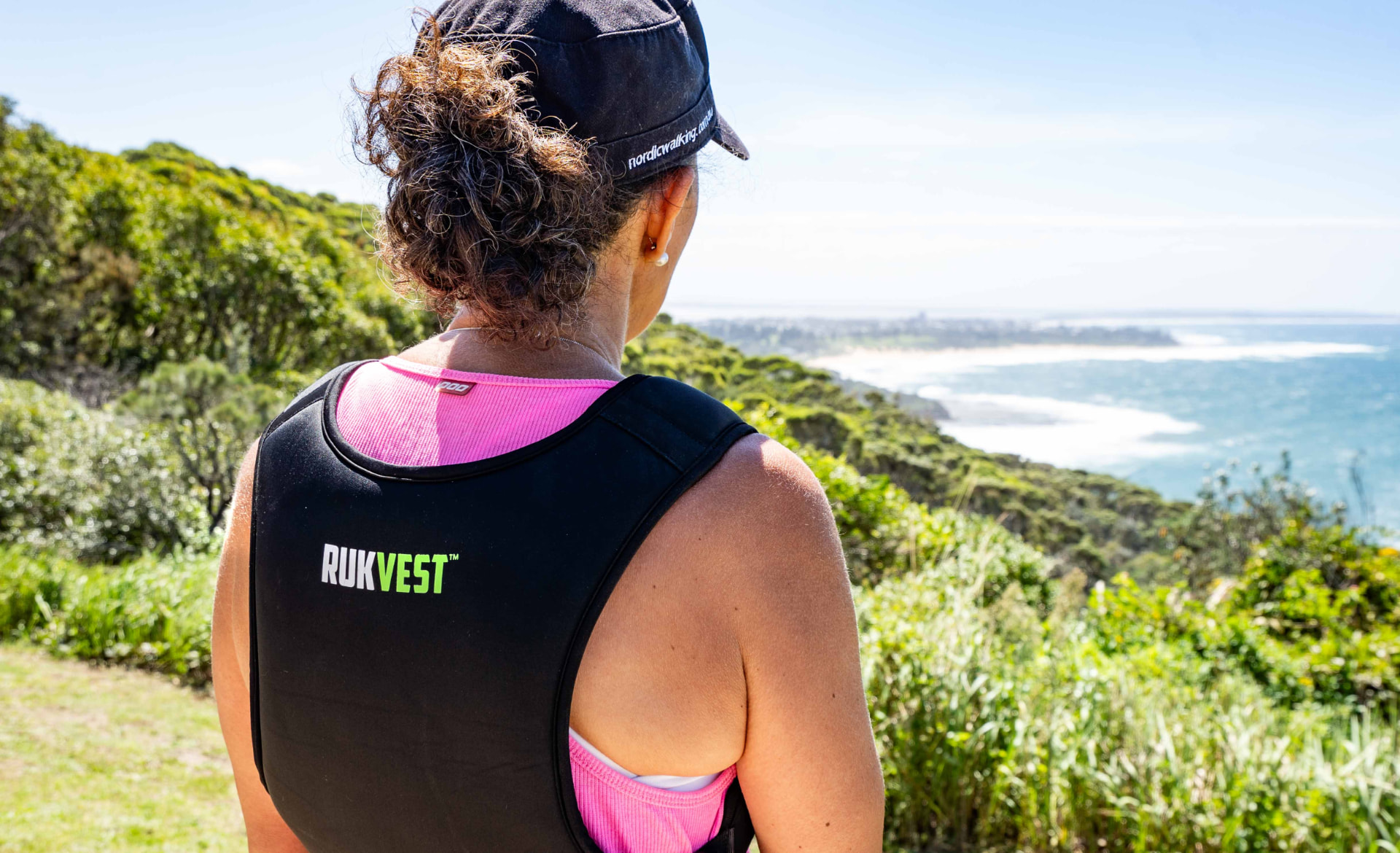
Weighted vests have become one of the more visible fitness trends of recent years, and for midlife and perimenopausal women the appeal makes sense. Here is what the research actually shows across cardiovascular fitness, strength, balance and bone health.
Eve Insight
A weighted vest turns an everyday walk into cardiovascular conditioning, leg strength and balance training in one low-impact habit - a rare combination in exercise science.
Weighted vests have become one of the more visible fitness trends of the past few years, and for midlife and perimenopausal women in particular, the appeal makes sense. It's a low-impact, time-efficient way to add more physiological challenge to something you're already doing every day. The genuinely exciting part is that the research now backs this up across several dimensions of longevity, not just one.
A real cardiovascular and metabolic upgrade
Adding load to a walk changes its physiology in a measurable way. A University of New Mexico study, commissioned by the American Council on Exercise and conducted specifically in untrained women, found that walking with a vest at 15% of body weight increased calorie burn by around 12% compared with walking unloaded, and that walking on an incline with a 10% bodyweight vest increased it by around 13%, both described by the researchers as a meaningful lift in energy expenditure.1
This tracks with what Harvard Health has reported more broadly: walking with a weighted vest can improve the heart's pumping ability, expand lung capacity and increase calorie burn compared with walking alone.2 Dr Jessica Tomazic, a sports medicine specialist at Cleveland Clinic, has made a similar point, noting that weighted vests can help you expend more energy during exercise and that walking is one of the safest ways to start using one.3
For midlife women, this matters because it offers a way to elevate cardiovascular training without switching to higher-impact activities like running, which can be harder on joints and less appealing to sustain long-term. A brisk, weighted walk is a genuinely efficient way to spend time in a heart-healthy training zone.
Stronger legs, better everyday function
This is where some of the most encouraging recent research sits. A randomised controlled trial published in Physical Activity and Health had community-dwelling older adults follow the same 12-week walking and exercise program, with one group wearing a vest at 10% of body weight. The vest group showed statistically and clinically significant improvements in strength, sit-to-stand performance and aerobic capacity (measured via the 6-minute walk test) compared with the group doing identical exercise without the vest, exceeding the thresholds researchers use to define a clinically meaningful change.4
A separate study of women aged 65 to 74 doing a simple, home-based weighted step programme for just six weeks found a 10 to 11% improvement in lower-limb power output and meaningful gains in stair-climbing speed and power.5 That's a direct, practical marker of everyday function: the strength to get up from a chair, climb stairs and move confidently, which becomes increasingly protective with age.
Better balance, more confidence on your feet
Falls, not just fractures in isolation, are one of the biggest threats to independence as women age, and weighted walking research has looked directly at this. A supervised program combining weighted vest walking, strength training and balance work in older women produced measurable improvements in balance and self-reported confidence in physical ability, alongside strength gains.6 Separately, research summarised by health platform HealthCentral notes that a majority of adults over 55 in one study reported feeling more stable while wearing a weighted vest during exercise.7
A promising, still-growing piece of the bone health picture
Bone health is part of this story too, even if it's the area where the research is youngest. Exercise scientist Christine Snow's five-year study of postmenopausal women using a weighted vest during jumping exercises found better hip bone density outcomes than in the control group.8 Related research by Janet Shaw and Christine Snow found that a 9-month lower-body exercise program using weighted vests improved strength, balance and indices of fall risk in women aged 50 to 75.9 Separately, Dr Mehrsheed Sinaki's research at the Mayo Clinic found that postmenopausal women who built stronger back muscles using a weighted backpack had less than half the rate of vertebral fractures a decade later.10 A large 2025 randomised trial from Wake Forest University School of Medicine is now testing weighted vest use specifically to help preserve bone density during weight loss, adding real momentum to this area.11 It's a direction worth keeping an eye on as more research is published.
Getting the most out of weighted vests
A few practical points help you get the full benefit safely:
- Start around 5-10% of body weight and build up gradually as strength and confidence increase.
- Pair it with movement, not just wear. The research above centres on walking briskly, doing step-ups or stairs, and structured exercise, rather than passive all-day wear.
- Check in with your GP or physiotherapist first if you have a history of back, joint or vertebral issues, so your plan is right for you.
In conclusion
Weighted walking brings together cardiovascular conditioning, functional leg strength, balance and a promising bone health angle in one simple, low-impact habit, which is a rare combination in exercise science. For midlife and perimenopausal women looking for an efficient way to invest in long-term health and independence, it's an evidence-backed addition well worth considering.
This article is general information, not medical advice. Speak with your GP, endocrinologist or physiotherapist about what's appropriate for your individual health and any existing conditions.
References
1. McCormick JJ, Mermier C, Gibson A, Kravitz L. The metabolic cost of slow graded treadmill walking with a weighted vest in untrained females. Journal of Fitness Research, 2015. digitalrepository.unm.edu
2. Harvard Health Publishing. What are the benefits of walking with a weighted vest? health.harvard.edu
3. Miami Herald. Weighted vests gain mainstream traction as midlife adults embrace rucking and bone health benefits daily (featuring Dr Jessica Tomazic, Cleveland Clinic). miamiherald.com
4. Mierzwicki A. A Randomized Trial of Weighted Vest Use in Ambulatory Older Adults: Strength, Performance, and Quality of Life Outcomes. Physical Activity and Health, 2019. paahjournal.com
5. Low Volume, Home-Based Weighted Step Exercise Training Can Improve Lower Limb Muscle Power and Functional Ability in Community-Dwelling Older Women. International Journal of Environmental Research and Public Health. ncbi.nlm.nih.gov
6. Jessup JV, Horne C, Vishen RK, Wheeler D. Effects of exercise on bone density, balance, and self-efficacy in older women. Biological Research for Nursing, 2003. pubmed.ncbi.nlm.nih.gov
7. HealthCentral. Weighted Vest Benefits: Strength, Bone Health, and Everyday Fitness. healthcentral.com
8. Snow CM, Shaw JM, Winters KM, Witzke KA. Long-term exercise using weighted vests prevents hip bone loss in postmenopausal women. Journal of Gerontology: Medical Sciences, 2000;55(9):M489-491. pubmed.ncbi.nlm.nih.gov
9. Shaw JM, Snow CM. Weighted vest exercise improves indices of fall risk in older women. The Journals of Gerontology: Series A, 1998;53(1):M53-M58. doi.org
10. Sinaki M, Itoi E, Wahner HW, et al. Stronger back muscles reduce the incidence of vertebral fractures: a prospective 10-year follow-up of postmenopausal women. Bone, 2002. pubmed.ncbi.nlm.nih.gov
11. Beavers KM, et al. Weighted Vest Use or Resistance Exercise to Offset Weight Loss-Associated Bone Loss in Older Adults: A Randomized Clinical Trial. JAMA Network Open, 2025. pubmed.ncbi.nlm.nih.gov
About the author
RukSak - Australian-designed weighted gear brand.
Ready to build strength that lasts?
Browse strength and movement specialists vetted for women in midlife, and find a coach near you.
This article is shared for educational purposes only and does not replace professional medical advice. Always consult your doctor or qualified healthcare provider for guidance specific to your health.